Monday, 3 November 2014

Wild Indonesia


Wild Indonesia part 1
 
This is a summary of the wildlife (mostly mammals) observed on a trip to Indonesia (Reef and Rainforest’s latest destination) in late June and early July 2014. I was joined by my partner and Steve Morgan, a fellow mammal enthusiast and friend for the second half of the trip. We first visited Tanjung Puting National Park in Indonesian Borneo and then spent ten days exploring the superb Way Kambas National Park in southern Sumatra in search of some of the rarest and most charismatic mammals in South East Asia. The sightings indicate just how exciting the wildlife potential is of Way Kambas in particular. I positively identified an incredible 32 species of mammal in Way Kambas National Park alone along with an additional 4 species seen only in Tanjung Puting National Park, plus over 80 bird species and at 19 species of reptile and amphibian.

(Mangrove cat snake © Ian Loyd Reef and Rainforest Tours)
 
(Long-tailed macaque © Ian Loyd Reef and Rainforest Tours)
 
My many personal highlights from this trip included walking side by side with a wild orang-utan in Tanjung Puting National Park for over 5 minutes and politely giving him the right of way when he decided to overtake us. Seeing an exceptional three Malayan tapirs and being left speechless as one calmly strolled to within just metres of our vehicle in Way Kambas. Admiring a curious slow loris skilfully manoeuvring along a power line minutes after our arrival at our lodge in Way Kambas. Documenting the very rarely observed and truly bizarre feather-tailed treeshrew deep in the Sumatran rainforest and peacefully watching wild Sumatran elephants drinking from the Way Kanan River blissfully unaware of our presence.

(Bornean Orang-utan © Ian Loyd Reef and Rainforest Tours)


A rare forest that is still full of Orang-utans


(Wild Bornean Orang-utan © Ian Loyd Reef and Rainforest Tours)
 
The first part of my trip took me to Kalimantan (Indonesian Borneo) and to its premium National Park; Tanjung Puting. The park is the largest protected forest in central Kalimantan and covers 3,040 square km of lowland dipterocarp and peat swamp forest and is probably home to highest density (over 6000) of wild orang-utans in the world. The best wildlife viewing centres on world renowned Camp Leakey. This site was set up in 1971 by Louis Leakey, to support research into wild orang-utans and over the years, scientists here have habituated and studied hundreds of the endangered apes. The chief researcher now is Birute Galdikas who, together with Jane Goodall and Dian Fossey, worked with Leakey to form many of the current theories on primate behaviour and biology. This site was also one of the foremost rehabilitation centres for orphaned orangs. In 1995 new regulations in Kalimantan prohibited the reintroduction of orang-utans into areas already supporting healthy wild populations to prevent the risk of disease transmission, and there are currently now no new releases to the Camp Leakey area.
(Wild Bornean Orang-utan © Ian Loyd Reef and Rainforest Tours)
 (Pitcher plant © Ian Loyd Reef and Rainforest Tours)

(Path in Tanjung Puting © Ian Loyd Reef and Rainforest Tours)
 
The population of orang-utans at Camp Leakey is a mixture of rehabilitated, descendants of rehabilitated and truly wild but habituated orang-utans and almost certainly provides the greatest orang utan experience in the world today. It’s an easy 30 minute walk from the boat jetty to the feeding station in an area of open peat forest, where a mixture of fruit is put out to provide an extra food source for the great apes as it is thought there are no longer enough natural fruiting trees to support the healthy orang-utan population here.
(Wild Bornean Orang-utan © Ian Loyd Reef and Rainforest Tours)

(Wild Bornean Orang-utan © Ian Loyd Reef and Rainforest Tours)
 
We had every possible type of orang-utan encounter here including mothers with curious new-borns, infants and large (sometimes aggressive) males. On arrival on our first visit we had a young male actually pass us on the boardwalk, as he got closer I knelt down to seem less intimidating and encourage him to pass by. He paused right alongside us and actually looked into each of our eyes in turn with as much curiosity as we had for him.
 

With the abundance of fruit on the feeding table at Camp Leakey, this area is also the best spot to see the aptly named and very entertaining agile gibbon and sounders of wonderful bearded pigs within the park. We had superb close views of both near the feeding station and along trails through the forest. We also saw a pair of tiny black-eared pygmy squirrels in the lower branches near the camp as well as many common sun skinks, woodpeckers and oriental pied hornbills. Entertaining Proboscis monkeys, long-tailed macaques and silvered langurs were all also easily seen each day on outings along the river. As these primates spend the night in the branches overhanging the river for safety from clouded leopards and other predators, dusk always produced the highest numbers and most entertaining behaviour of these monkeys.


(Agile gibbon © Ian Loyd Reef and Rainforest Tours)


(Bearded pig © Ian Loyd Reef and Rainforest Tours)


(Proboscis monkey © Ian Loyd Reef and Rainforest Tours)


(Proboscis monkey © Ian Loyd Reef and Rainforest Tours)


Another speciality of the park is the now very rare Malaysian false gharial crocodile. Its numbers are plummeting in the wild due to the rapid loss of its peat swamp forest habitat, but it still thrives in Tanjung Puting. We enjoyed some outstanding sightings of this charismatic species in the unpolluted black water rivers close to Camp Leaky, as well as great sightings of the much larger and more powerful saltwater (or estuarine) crocodile. My favourite reptilian sighting however was of the Sumatran spitting cobra was that swam in front of our boat!

(Malayan false gharial © Ian Loyd Reef and Rainforest Tours)

(Sumatran spitting cobra © Ian Loyd Reef and Rainforest Tours)
 
I also made a visit to the government run turtle conservation project at Tanjung Keluang near to Pangkalan Buun, the entry point to the National Park. Here I learnt of the struggle to boost the numbers of green and hawksbill turtles that nest on the beautiful golden sand beaches. Here guests can enjoy the unforgettable experience of releasing young turtles (in our case a beautiful hawksbill) back to sea. Some of the eggs are collected from the nests and the young tended to in captivity before being released when they are at an older age, helping to boost the much needed numbers.

(Hawksbill turtle © Ian Loyd Reef and Rainforest Tours)

(Hawksbill turtle © Ian Loyd Reef and Rainforest Tours)


Wednesday, 15 October 2014

Wild Guyana part 2


Wild Guyana part 2
The Next leg of my journey took me to the Amerindian community of Annai where the very comfortable Rock View Lodge was the base. This lodge offers some of the best accommodation in the interior with a particularly welcoming swimming pool. Although the lodge is not in the most strategic position for wildlife, even here I saw a surprisingly high diversity of wildlife including a giant anteater with a baby on its back on the savannah just at the back of the property. We also walked up the Panorama trail here which leads up a large hill into stunted forest. Here I saw some good birds as well the striking yellow banded poison dart frog.


(Yellow banded poison dart frog © Ian Loyd Reef and Rainforest Tours)
 
Lastly I made the lengthy but fully worthwhile journey to the remote community of Rewa. The community of approximately 220 people here is predominately Macushi with a few families of the Wapishana and Patamona tribes. Villagers practice subsistence farming, fishing and hunting with little opportunity for cash employment. In 2005 the community constructed the Rewa Eco-lodge so that they could establish a sustainable eco-tourism business. My favorite feature of the lodge is the breakfast table which is positioned overlooking the Rewa River and dense rainforested banks so you can watch macaws flying overhead and black caiman swimming past while your breakfast.


(Blue and yellow macaws © Ian Loyd Reef and Rainforest Tours)


(Seasonal lake at Rewa © Ian Loyd Reef and Rainforest Tours)


The community was exceptionally friendly and even invited me to see their school. Primates were particularly abundant here and Venezuelan red howler and brown and weeping capuchin, Guianan brown-bearded and white faced saki, black spider and common squirrel monkey are all regularly spotted. The best primate for me though was a troop of rare golden-handed tamarins which passed through the forest bordering the lodge just before breakfast.
 

(Golden-handed tamarin © Ian Loyd Reef and Rainforest Tours)
 
Another highlight here was finding a group of giant otters hunting along the Rewa River. There was a youngster in the group who was particularly curious about us and we were able to watch the adults haul up and munch through some impressive catfish.

 
(Giant otter © Ian Loyd Reef and Rainforest Tours)
 

The Force of the Falls

My first view of Guyana’s number one attraction was just a cloud of mist rising from a clearing in the sea of rainforest below. As we neared, a Mexican wave of gasps of awe spread through the plane as we were all treated to our first views of magnificent Kaieteur Falls. Almost every visitor to the falls arrives by plane with this unforgettable low fly by over the very top of the cascade their first experience. Kaieteur thunders over a precipice, plummeting two hundred and twenty four metres, making it the longest single drop waterfall in the world.

 
(Kaieteur Falls © Ian Loyd Reef and Rainforest Tours)

 
(Kaieteur Falls © Ian Loyd Reef and Rainforest Tours)


Once on firm ground, I made my way to Johnson’s viewpoint which is the furthest point from the falls but gave the greatest sense of scale of this natural wonder. Here I learnt about most enduring story for the name of the falls which is that of Kaie, a great old chief of the local Patamona tribe who to save his people, from being destroyed by the savage Caribishi, sacrificed himself to the Makonaima, the Great Spirit, by canoeing himself over the falls. On the way to the next major viewpoint I explored the unique cloud forest ecosystem created by the microclimate of the falls. Here I enjoyed the impressive tank bromeliads - the world’s largest and themselves home to the tiny, endemic golden rocket frog which after some searching I eventually tracked down hiding deep inside one of the more shaded bromeliads. Further along the trail I emerged at the aptly named rainbow viewpoint which for me was the most impressive view of all.
 
 
(Kaieteur golden rocket frog © Ian Loyd Reef and Rainforest Tours)
 
 
(Tank bromeliads © Ian Loyd Reef and Rainforest Tours)
 
 
(Kaieteur Falls © Ian Loyd Reef and Rainforest Tours)
 
The final viewpoint however was from the top of the falls, which allows you to walk right up the edge and look down on the dramatic cascade below. The most special part of Kaieteur that is relevant to all of Guyana though is that it has remained natural, un-commercialised and still gives you a tremendous feeling of adventure and discovery.
 

Tuesday, 14 October 2014

Wild Guyana part 1


The next part of my journey took me to little visited and very wild Guyana.

For me there are few countries left in our overcrowded world that can offer the natural riches that Guyana can. The very fact that almost 75% of the country’s landmass remains untouched rainforest is enough to make the country special, but its extreme biodiversity, un-commercialised natural attractions, proud and traditional rural communities and its sustainable outlook make it truly unique.


(Transnational highway in Iwokrama © Ian Loyd Reef and Rainforest Tours)

I was very excited to explore the wild heart of the Guyana and curious as to what wildlife we might encounter in this still very under explored country. We started our week long journey at Karanambu Ranch; the home of
Diane McTurk, widely known for her work rehabilitating orphaned giant river otters. Unfortunately we never had the opportunity to meet Diane but did meet Trip, an orphaned giant otter that she was rehabilitating at the time.

(Karanambu airstrip in the Rupununi © Ian Loyd Reef and Rainforest Tours)
Karanambu sits on the edge of vast Rupununi savannahs in central Guyana. On our first morning we made our way out into an area of rolling grassland dotted with huge termite mounds and seasonal ponds. The savannah here is home to a healthy population of giant anteaters and it took us very little time to track one down. With some patience we were able to approach quite close downwind on foot as they rely almost entirely on their sense of smell to avoid predators.

 
(Giant anteater © Ian Loyd Reef and Rainforest Tours)

Back at the ranch for breakfast, one of the members of our group told me about a mysterious animal that she described as “moved like a squirrel and looked like a cat” that she previously seen running away at the back of the ranch. It soon became apparent that she had seen a tayra! Salvador and Andrea, the wonderful hosts we had at Karanambu then informed me over breakfast that a tayra was making frequent visits to the mango trees at the back of the ranch. This was both thrilling yet slightly disappointing news. I had almost given up hope of ever seeing a tayra in the wild, despite many wanderings through areas they occur in Brazil, because of their unpredictable habits and large territory sizes. I had even tried baiting for them in the past without success.
However at news that it may return and with just 40 minutes left until we had to leave, I wasted no time in finishing my breakfast and hiding amongst some debris at the back of ranch overlooking the mango trees, praying it would return in the extremely short window of time left. It got to the final 10 minutes until my luck was definitely in, when it stealthy emerged from the forest edge to collect a sizeable mango and vanish again. However just as I was leaving it re-emerged on a fallen tree and gave me a wonderful prolonged sighting.
 
(Tayra © Ian Loyd Reef and Rainforest Tours)

After stopping at a few other locations en route we then made our way to the Iwokarama River Lodge and Research station in the heart of the country. The centre was established to protect and manage a huge (one million acres) rainforest reserve. The station is surrounded by pristine rainforest, home to a staggering biodiversity that is still being researched. The Iwokrama Rainforest Reserve supports 1,500 species of flora, 500 species of bird, 420 species of fish (a world record), 150 species of reptile and amphibian and 200 species of mammal including 90 species of bat (another world record). Iwokrama was  jointly established in 1996 by the government of Guyana and the commonwealth to create a reserve that will leave a lasting ecological, economical, and social benefit for the local people and the rest of the world. While we stayed at the centre we learnt about the Iwokrama science committee who are currently studying the ecosystem services provided by the forest and converting this into a monetary value.
 
(Machete savane © Ian Loyd Reef and Rainforest Tours)

I was especially thrilled by the abundance of birds here in particular macaws and parrots, and was treated to fantastic fly pasts from blue and yellow, red and green and scarlet macaws and red fan, organge-winged and mealy parrots. One of the specialty birds we saw here was the capuchinbird, a strange-looking member of the cotinga family that creates a song during its mating lek that resembles a faulty chainsaw. There is a lek just twenty minutes’ walk into the forest from the river lodge.


(Capuchinbirds © Ian Loyd Reef and Rainforest Tours)
 
One of my favourite experiences at Iwokarama however was the hike we made to the summit of Turtle Mountain. Although a strenuous walk in humid conditions, the stunning views of untouched rainforest as far as the eye could see in every direction from the top was truly unforgettable. Unfortunately my pictures did not do justice to the exceptional views and incredible sense of wildness that I experienced on the summit of this mountain. There was plenty of wildlife to be seen here too and we were rewarded with prolonged views of several black spider and a large troop of Venezuelan red howler monkeys feeding in the canopy below us. Birds included the rare orange-breasted falcon and more fly past macaws, red fan and black headed parrots.


(Untouched primary rainforest as far as the eye can see! © Ian Loyd Reef and Rainforest Tours)
 
 
(Black (red-faced) spider monkey © Ian Loyd Reef and Rainforest Tours)
 
Another of Iwokarama highlights is the thirty five metre high Canadian built canopy walkway. We visited the walkway twice while staying at the beautiful Atta Rainforest Lodge. The walkway gives a completely different perspective on the forest ecosystem and allowed us a chance to see shy canopy birds such as the elegant pompadour cotinga, pied puffbird and green aracari. However what happened on our early morning visit, will live in my memory forever.
 

(Iwokrama Canopy Walkway © Ian Loyd Reef and Rainforest Tours)
 
Not long after the  group I was with had just finished joking about how great it would be to see a harpy eagle as if on cue, the holy grail of the Neotropical bird world itself majestically flew into view just 10 metres past our heads and conveniently landed in a nearby tree to pose for pictures!
 
 
(Harpy eagle © Ian Loyd Reef and Rainforest Tours)
 
While birding from the walkway we stayed at Atta Rainforest Lodge. The lodge has deployed camera traps along the trails close to the lodge which are always a great way of discovering just what is out there. They had recorded a plethora of large and small mammal species including many different tapirs, ocelots, jaguars, pumas and collared peccaries all on the trails right by the lodge! The transnational highway (a dirt track) that runs past the lodge has a good record of sightings of jaguars particularly (About a one in ten chance per drive). The local guides also thought there was a resident pack of bush dog in this area, but unless a den is found, it would be a hopeless task to look for them. Driving along the transnational road here after dark with spotlights and just after first light would offer good chances however to see a whole range of Neotropical mammals judging by the sightings guides have had in the past. Walking the trails at Atta would also offer a chance of finding olingo and kinkajou. I saw several red-rumped agoutis around the lodge clearing at dawn here as well as a pair of habituated black curassows (a Guianan shield endemic) which pass through the clearing at dawn most mornings. Red brocket deer and the stunning crimson fruitcrow are also seen here on a fairly regular basis.

 
(Black curassow © Ian Loyd Reef and Rainforest Tours)
 
 
End of part 1 

Monday, 13 October 2014

Trinidad

The next stage of my trip took me to Trinidad. Trinidad's close proximity and recent separation (11,000 years) from the South American continent gives it a similar fauna and flora and there many more species of mammal, reptile and amphibian than on Tobago. The island is 50 miles long and 37 wide, with many landscapes and habitats including mangroves, littoral and seasonal deciduous forests. On my trip I first visited its hilly northern range which rises to a little over 3000 feet, and most of which is still beautifully covered by tropical humid rainforest. Here I stayed at the world famous Asa Wright Nature Centre.


(Northern range © Ian Loyd Reef and Rainforest Tours)
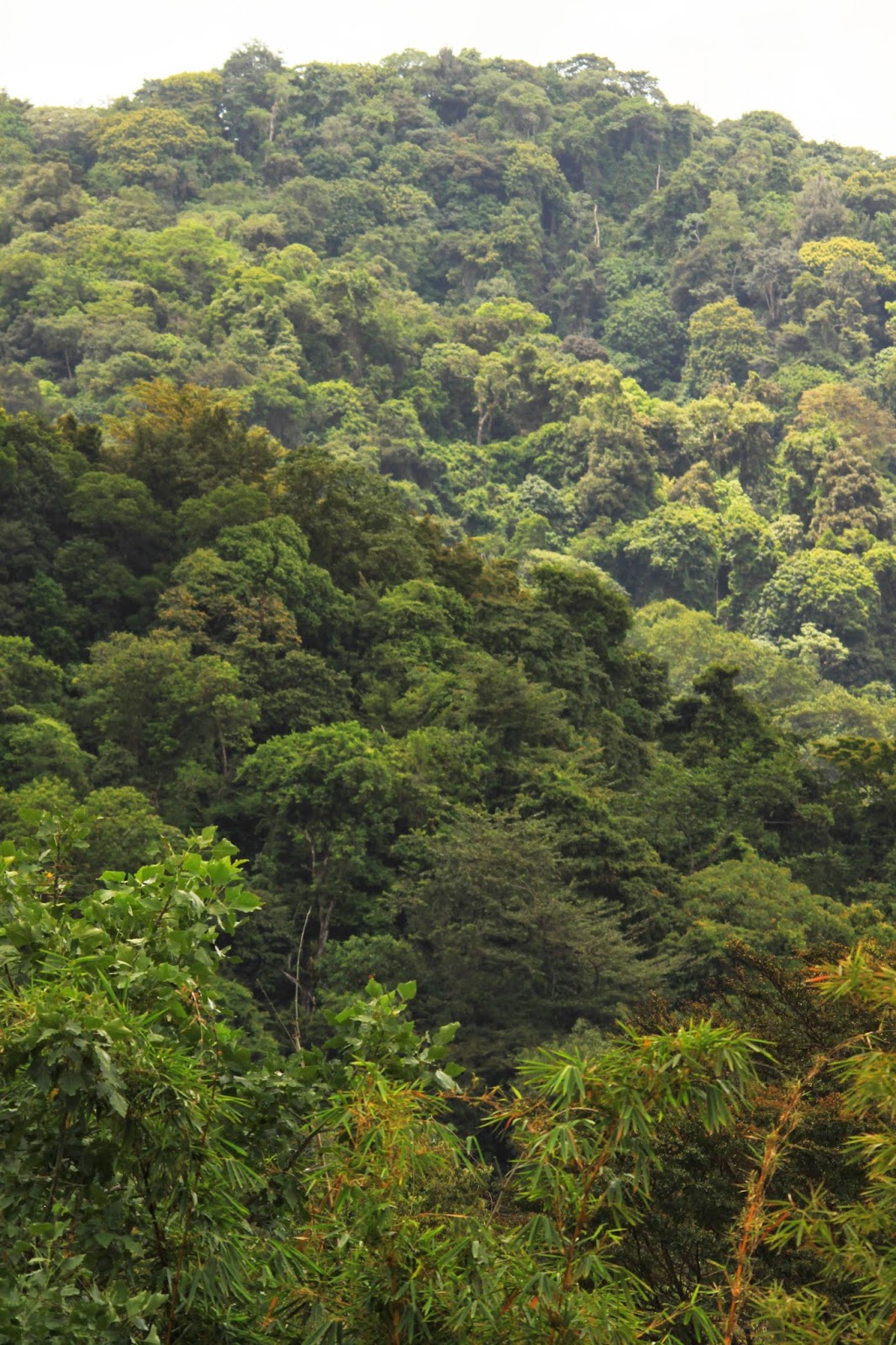
The centre has an exceptional biodiversity, with a species list for the area comprising 400 birds, 108 mammals, 55 reptiles, 25 amphibians and 617 butterflies. The first feature that greets you on arrival at the centre is  the fantastic veranda which overlooks the forested valley and has an abundance of hummingbird and fruit feeders on view. The fruit feeders attract a great diversity of species including green and purple honeycreepers, bay-headed, silver-beaked and white-lined tanager, violaceous euphonia. Plus half a dozen hummingbird species are almost always on view too.

 
(Purple honeycreeper © Ian Loyd Reef and Rainforest Tours)

After dinner, I joined a night walk along the entrance track to search for smaller creatures of the night. Trinidad chevron tarantulas, common whip scorpion spiders, true scorpions and several stick insect species were all surprisingly abundant. I also saw variegated gecko, polka-dot tree frog, tropical flat snake, common cat-eyed snake and a spectacular South American common coral snake and juvenile cook's tree boa. I also found the endemic yellow-throated frog (Mannophryne trinitatis) its favoured habitat of small mossy streams.


(Trinidad Chevron tarantula © Ian Loyd Reef and Rainforest Tours)


(Trinidad Chevron tarantula © Ian Loyd Reef and Rainforest Tours)


(Polka dot tree frog © Ian Loyd Reef and Rainforest Tours)
 
 
(Tropical flat snake © Ian Loyd Reef and Rainforest Tours)

 
(Cat-eyed snake Leptodeira annulata © Ian Loyd Reef and Rainforest Tours)

 
(Variegated gecko Gonatodes ceciliae © Ian Loyd Reef and Rainforest Tours)

Birding the next morning I focussed on trying to find the tufted coquette which is not only incredibly beautiful but also has the title of being the second smallest bird in the world! A pair regular visit the flowering bushes below the veranda of the centre. After a short wait I managed a fantastic view of a male and more brief sighting of the female. This species is actually too small to feed from the artificial hummingbird feeders so you have to stake it out.

 
(Tufted coquette © Ian Loyd Reef and Rainforest Tours)


On a walk along one of the trails through the reserve I saw such species such as the recently split Guianan trogon, channel-billed toucan, lineated woodpecker, white-bearded and golden-headed manakin, bearded bellbird and bay-headed tanager.

 
(Golden-headed manakins © Ian Loyd Reef and Rainforest Tours)


My group also visited the Dunston Cave, (actually a gorge) home of the most accessible colony of oilbirds in the world. Oilbirds are the only nocturnal, fruit-eating birds in the world and use a combination of echolocation, a powerful sense of smell and super-sensitive vision to locate fruit bearing trees at night. We were very privileged to see these mysterious birds at their roost.

 
(Oilbird © Ian Loyd Reef and Rainforest Tours)

From Asa Wright we moved south to visit Tamana Bat Cave. The impressive cave systems on Tamana Hill are home to an estimated 500,000 to 3 million bats of 13 species. Entering the caves is a remarkable experience but even more spectacular is watching the emergence of thousands of the bats at dusk.

 
(Davy's naked backed bats © Ian Loyd Reef and Rainforest Tours)

 
(Trinidad funnel-eared bat © Ian Loyd Reef and Rainforest Tours)

While in central Trinidad we also paid a visit to Matura beach one night, to watch leatherback turtles laying their eggs. Matura beach is the second most important nesting site in Trinidad for leatherbacks. The rural village of Matura previously received most of its income from fishing and agriculture, but in recent years these industries have been in decline while turtle watching tourism has been on the rise. This has helped boost the income for the village but with increased visitor numbers it has also caused some problems with disturbance of the turtles. There are now regulations in place and an excellent team of local volunteer rangers to enforce them. Watching an enormous female leatherback (they can grow to be as large as a small mini) laying her eggs, and then creating a decoy nest for the predators to find in the morning was fascinating and will live in my memory forever.
 
(Leatherback turtle © Ian Loyd Reef and Rainforest Tours)

No trip to Trinidad would be complete without visiting Caroni swamp in the centre of the country. Here we watched hundreds of scarlet ibis coming to roost in the mangrove islands of the Caroni bird sanctuary. I was equally as excited about the impressive Cook's tree boa we found saw coiled up above our heads.


(Scarlet ibis © Ian Loyd Reef and Rainforest Tours)


(Cook's tree boa © Ian Loyd Reef and Rainforest Tours)

Tobago.

Back in May, I went on a familiarisation trip for my job with Reef and Rainforest Tours, (www.reefandrainforest.co.uk) to Guyana, Trinidad and Tobago. It was a very special trip which enabled me to really get to know both counties and see a good spread of each countries' natural highlights.


(Brown pelicans © Ian Loyd Reef and Rainforest Tours)

I started the trip with a week spent on Trinidad and Tobago. The Republic of Trinidad and Tobago is a twin island country which lie just off the northern edge of South America. Despite being so geographically close the two islands are quite different in their culture, geography and biodiversity. Trinidad is distinctly South American in its wildlife and ecosystems and is just seven miles off the coast of north-eastern Venezuela. While much smaller Tobago sits within the Caribbean Sea and offers rich coral reefs, dry deciduous and tropical rainforest, and has a very Caribbean culture with plenty fishing and "Liming" (or sweet doing nothing)!


(© Ian Loyd Reef and Rainforest Tours)

Starting on Tobago I enjoyed a variety of tours and sampled many fun and interesting activities including paddle boarding across a reef at night, where we then had the opportunity to swim amongst bioluminescent algae and watch the fish light up the water. I also visited the award winning Tobago Cocoa Estate to see how the local cocoa is harvested and transformed into tasty dark chocolate.

Most of the wildlife action was marine based while on Tobago and I enjoyed my first true coral reef snorkelling in Cotton and Emerald Bays. I was blown away by the diversity and health of the corals here. The abundant reef fish included spotted moray eels, several species of jacks, triggerfish, kingfish, angelfish and I also had sightings of a nudibranch sp, cuttlefish and squid. There was more good snorkelling in the reef offshore from the wonderful Blue Waters Inn in Speyside. Here I saw some magnificent examples of brain corals and had a glimpse of an unidentified reef shark and an adult hawksbill turtle.

I have no idea where they got the name for Blue Waters Inn from?

 
(© Ian Loyd Reef and Rainforest Tours)


The accommodation and services here are superb and it is ideally located for naturalists visiting the island as Little Tobago Island (The islands second largest seabird colony) is just a 30 minute crossing by glass bottom boat away. Little Tobago is mostly covered by deciduous dry forest but is predator free and supports a high density of breeding red-billed tropicbird, brown and red-footed boobies, brown noddy sooty tern and Audubon's shearwater. All of these species except for the shearwater are unmissable on a visit to the island during the breeding season.


(Red-billed tropicbird © Ian Loyd Reef and Rainforest Tours)


(Brown noddy © Ian Loyd Reef and Rainforest Tours)

I was lucky to be guided by Newton George on the trip (Tobago's most renowned wildlife guide and former warden of Little Tobago) who enabled us to have a very privileged view of the island's rarest breeding bird the Audubon's shearwater in its nest. 

Back on land Newton very kindly took us to his house where he had set up several hummingbird feeders and even offered us a beer to accompany the spectacle! Top Bloke.


(Copper-rumped hummingbird © Ian Loyd Reef and Rainforest Tours)
 

(The stunning ruby topaz hummingbird © Ian Loyd Reef and Rainforest Tours)

I also spent a morning birding in the Main Ridge Forest Reserve, a fantastic tract of tropical rainforest, UNESCO site and one of the oldest legally protected forests in the world. The reserve was established in 1776 to sustain rainfall on the island and in turn maintain fertile soil for agriculture. There is a good trail network through the forest including walks to some attractive waterfalls and viewpoints. Birding here was great with sightings of blue-backed manakin, Trinidad motmot, collared trogon, white-tailed nightjar, cocoa woodcreeper, stripe-breasted spinetail all common as well as the rare and endemic white-tailed sabrewing.


(Trinidad Motmot © Ian Loyd Reef and Rainforest Tours)


(White-tailed nightjar © Ian Loyd Reef and Rainforest Tours)


(White-tailed sabrewing © Ian Loyd Reef and Rainforest Tours)